
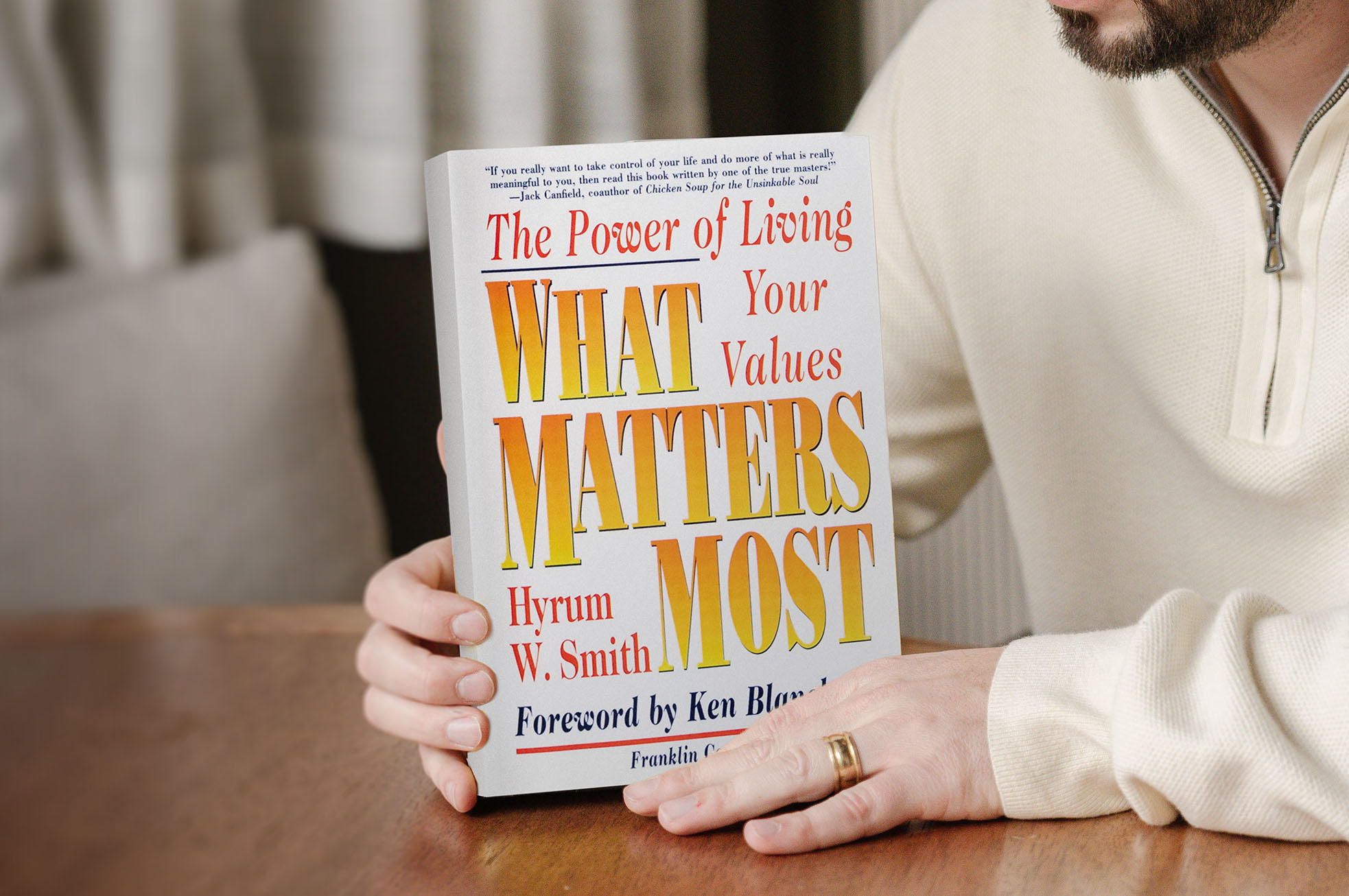
The opening section of What Matters Most lays out a bold premise: lasting peace and fulfillment are not found through circumstances, achievements, or even deliberate time-management techniques alone. They arise when daily life becomes a faithful expression of a person’s deepest governing values.
Hyrum Smith begins with a striking metaphor. In the months before the 1980 eruption of Mount St. Helens, the north flank of the mountain bulged outward more than 450 feet because of pressure building beneath the surface. Smith sees a parallel in contemporary society. Traditional values—respect for human life, cooperation for the common good, reverence, and willingness to place the needs of others above immediate self-gratification—once formed a stable foundation. Today, many of those assumptions appear to be eroding, creating internal pressure with potentially catastrophic consequences.
The author is careful to note that global or cultural renewal begins with individual renewal. “Just as a journey of a thousand miles is undertaken one step at a time,” he writes, “so the healing of our civilization must take place one individual and one family at a time.” The book therefore focuses not on systemic reform but on a practical, personal process that anyone can follow.
That process, which will unfold across the remaining chapters, promises two primary outcomes. First, readers will experience the inner peace that comes when behavior consistently reflects what matters most. Second, they will unlock reserves of energy and capability that remain dormant when life is out of alignment with core values.
Smith observes that nearly everyone, regardless of outward success, quietly admits that “life is not the way they wish it to be. They long for something more.” In the rush of modern schedules, many have lost contact with the very things that create lasting satisfaction: close family relationships, meaningful work, service to others, and the quiet confidence of following an inner compass.
The remainder of the book offers a structured method to reverse that drift. Readers will identify the various roles they play in life (parent, spouse, friend, individual, etc.), surface the governing values attached to each role, articulate a concise personal mission statement, translate those values into long-range goals, and—most importantly—ensure that daily actions remain connected to what has been identified as most important.
One quotation captures the heart of the entire work:
“When your daily actions reflect and relate to what matters most to you, you will experience the greatest of all prizes: inner peace.”
A closing thought from a mentor who shaped the author’s life is worth carrying forward: “Be yourself, but be that perfectly.” The pages ahead are designed to help every reader move closer to that ideal.
Questions for Reflection:
1. When you consider the “Mount St. Helens” image of building inner pressure, where do you notice that tension most in your own life right now?
2. On a 1–10 scale, how connected do you currently feel to the things that matter most deeply to you?
3. If your typical week were audited, what percentage of your time and energy would you estimate is spent in genuine alignment with your inner values?
Please share your thoughts in the comments below. On January 26 we will move to pages 26–45 and begin discussing what creates a hero and why we look up to certain people in our lives.


One Response
Most tension I typically feel is in not getting to the certain things that are important to my values/roles that I have identified, mainly due to urgent conflicts that arise (or just “burn out”). I do pretty well with aligning my time to inner values, but the proactive (non-urgent) items mentioned above are often left aside. These items would cause me to lower my rating on feeling connected to my inner values.